Maintenance: the quiet work that protects your home's value
Maintenance doesn't add value — it protects it. Why small problems compound, what buyers punish, and the simple rhythm that keeps your home worth what it should be.

Nobody throws a party for a serviced furnace. Maintenance is the least glamorous money you'll ever spend on your home — invisible when it works, and apparently optional right up until it isn't.
But if you look at where homeowners actually lose money, it's rarely because they picked the wrong backsplash. It's because small, knowable problems were left alone long enough to become big ones. Maintenance is the discipline of not letting that happen, and it deserves a more honest reputation: it's the highest-stakes financial work you do on your home.
Protection and creation are different jobs
It helps to be precise about what maintenance does. As we covered in what determines your home's value, most of what you spend on a home doesn't increase its value — it protects value the home already has.
A sound roof doesn't make your home worth more than the comparable house down the street. It makes your home worth what it's supposed to be worth. Let the roof age past its life, and you don't just lose the cost of a roof at sale — buyers discount for hassle, uncertainty, and whatever the leak may have touched that they can't see.
That asymmetry is the core of it: good maintenance earns you nothing visible, and skipped maintenance costs you more than the repair ever would have. Once you accept that, the goal stops being "make the house better" and becomes something calmer: keep the house fully itself.
Small problems compound quietly
The expensive failures in a home almost never start expensive.
- A $10 tube of caulk not applied around a tub becomes moisture in a wall cavity, which becomes subfloor rot, which becomes a four-figure bathroom repair.
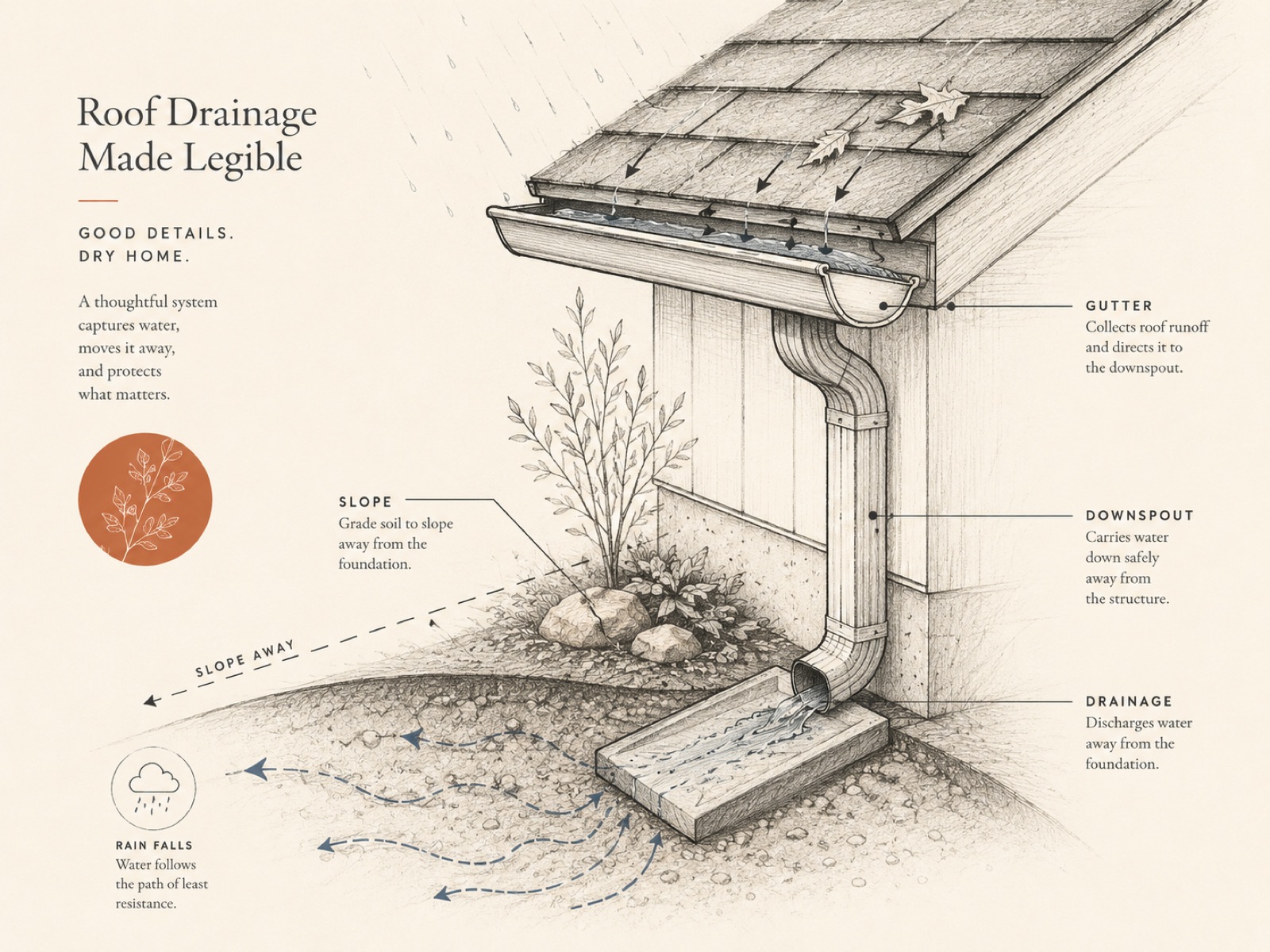
- A clogged gutter becomes water at the foundation, which becomes a damp basement, which becomes a structural conversation.
- A furnace running un-serviced doesn't fail on a mild afternoon. It fails in January, at emergency-call rates, possibly taking weeks of comfort with it.
Water is the recurring villain. If you only have attention for one category of upkeep, spend it on everything that keeps water moving away from the house: roof, flashing, gutters, grading, caulk, and supply lines. Most of the catastrophic entries on an inspection report started as water being somewhere it shouldn't be — slowly.
What buyers and inspectors actually punish
When a home sells, deferred maintenance gets priced three times:
- At the showing. Buyers read small neglect as a proxy for hidden neglect. A sticking door and stained ceiling tile suggest the whole house has been run this way.
- At the inspection. Every deferred item becomes a line in a report, and inspection reports read scarier than they are — which means each finding costs you negotiating leverage disproportionate to its repair price.
- At the appraisal. Condition is one of the few levers that moves a valuation within your neighborhood's band — in either direction.
A well-maintained home doesn't get a premium so much as it avoids all three discounts. That's the quiet return on the unglamorous work.
A rhythm, not a scramble
The good news: maintenance is almost entirely predictable. Homes age on schedules. A simple seasonal rhythm covers most of it:
- Spring — roof and gutters after winter, exterior caulk and paint, grading and drainage, AC service before the heat.
- Summer — decks and fences, irrigation, wash siding, check windows and screens.
- Fall — furnace service before the cold, gutters after leaves, weatherstripping, shut off exterior water.
- Winter — water heater check, test safety devices, watch for ice damming, keep an eye on attic moisture.
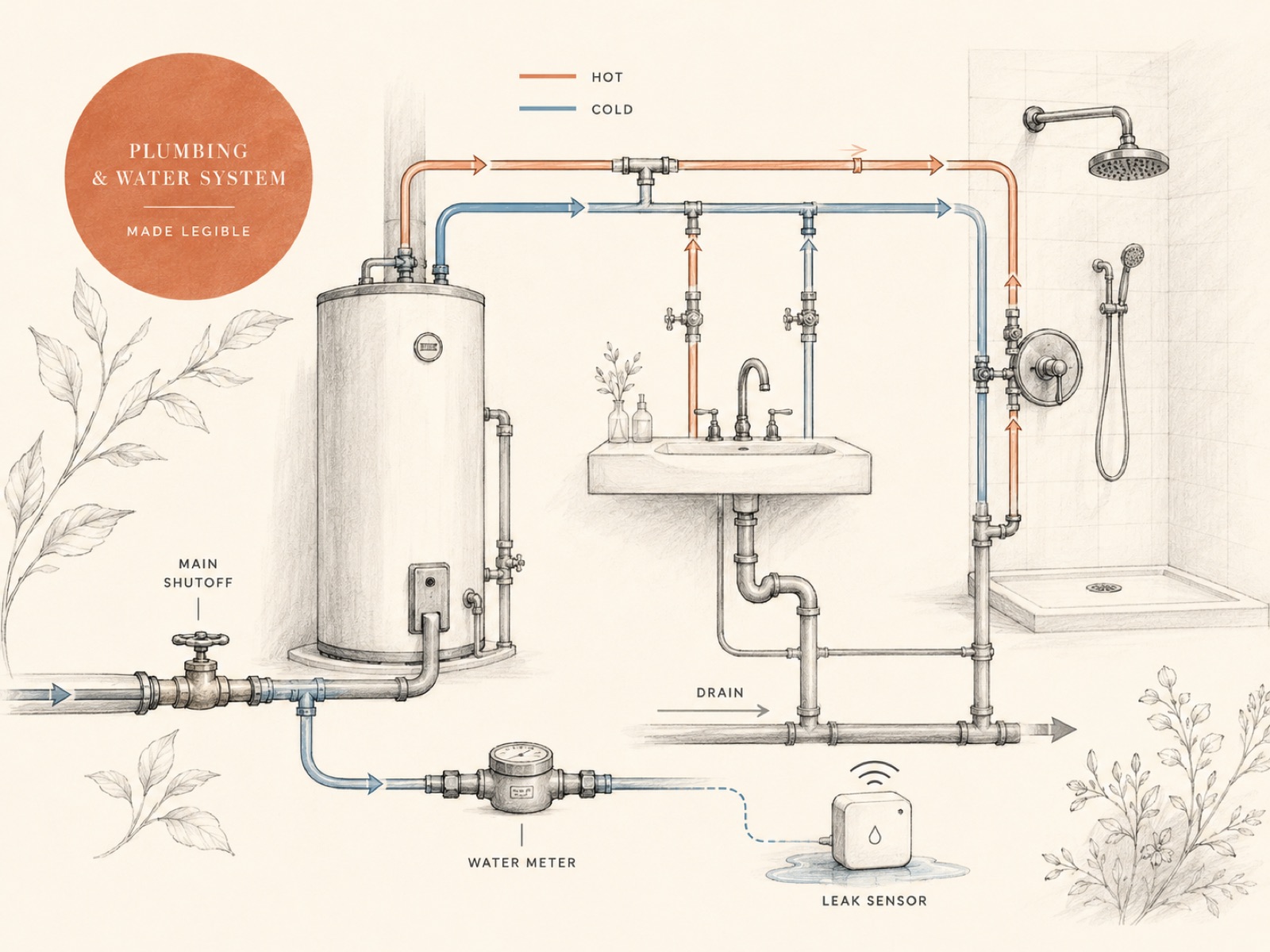
And underneath the seasons, the long clocks: roofs, water heaters, HVAC, and appliances all have known service lives. A water heater past year ten isn't a surprise waiting to happen — it's an appointment you haven't scheduled yet. Knowing where each system sits on its clock turns "emergencies" into line items you planned two years ago.
Keep the receipts — they're part of the value
There's a second half to maintenance that most homeowners skip: proving it happened.
When you sell, "new roof in 2024" with an invoice and permit is evidence. "I think the roof is pretty new" is a shrug. Buyers, inspectors, and appraisers all respond to documentation, because documentation removes uncertainty — and uncertainty is what discounts are made of.
The habit is light: keep dates, invoices, and photos of work done, in one place that isn't a kitchen drawer. A home with a legible history sells like a car with full service records — same machine, noticeably more trust.
When repair quietly becomes upgrade
One last distinction worth making at decision time. When something fails, you'll often face a choice between restoring it and improving it — replacing a failed water heater like-for-like versus upgrading to tankless, repairing siding versus residing the house.
Both can be right. Just price them honestly: the restore portion is protection (necessary, value-defending), and everything above it is an upgrade that should compete with other upgrades on its own merits — including how much of it you'll actually get back. Letting a failure stampede you into an unplanned upgrade is how maintenance budgets quietly double.
The discipline, in one sentence: know what your home's systems are doing, fix small things while they're small, write down what you did — and let the unglamorous work do what it does best, which is keep your largest asset worth what it should be.